Glass bottles used in suitable production environments may require production dates, batch information and other identification. CIJ's non-contact printing principle makes it possible to position a printhead alongside a moving production line. The final ink selection and coding result should be verified on the actual glass bottle because the catalog does not provide quantitative glass-adhesion data.
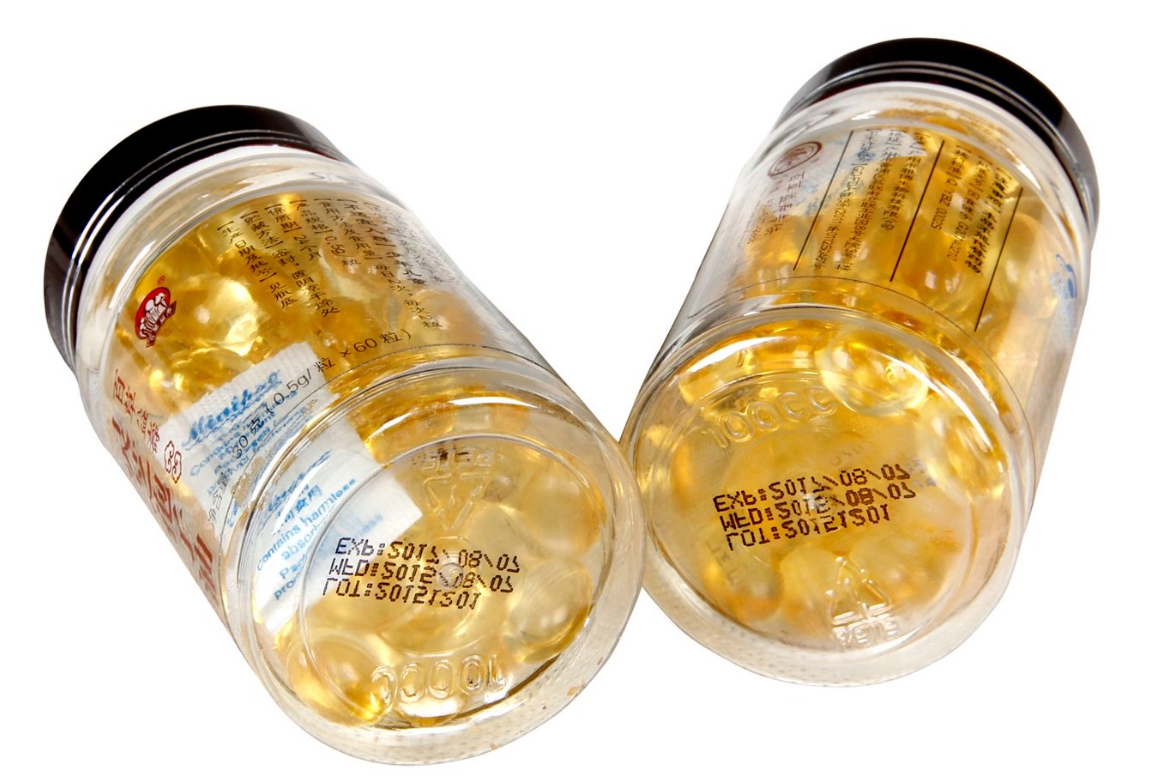
Glass bottles can move continuously through a production process.
CIJ technology does not require the printhead to physically contact the bottle during printing.
This allows identification to be incorporated into suitable online applications.
Typical Bottle Coding Content
The system can support content including:
Date + Batch Number + Serial Information + Barcode/QR Code
This provides more flexibility than limiting bottle identification to a simple fixed date.
Choosing Ink for Glass
The catalog provides multiple industrial ink options, including high-adhesion and other specialized inks.
However, it does not specify quantitative adhesion performance specifically for glass bottles.
The recommended process is therefore:
Bottle Sample → Ink Selection → Printing Test → Adhesion Evaluation → Production Configuration
High-Speed Bottle Lines
For fast-moving production, printhead positioning, bottle spacing and line speed should be evaluated together.
Conclusion
CIJ printing can provide a flexible non-contact approach to glass-bottle identification, but final ink performance should always be verified using the actual bottle.





