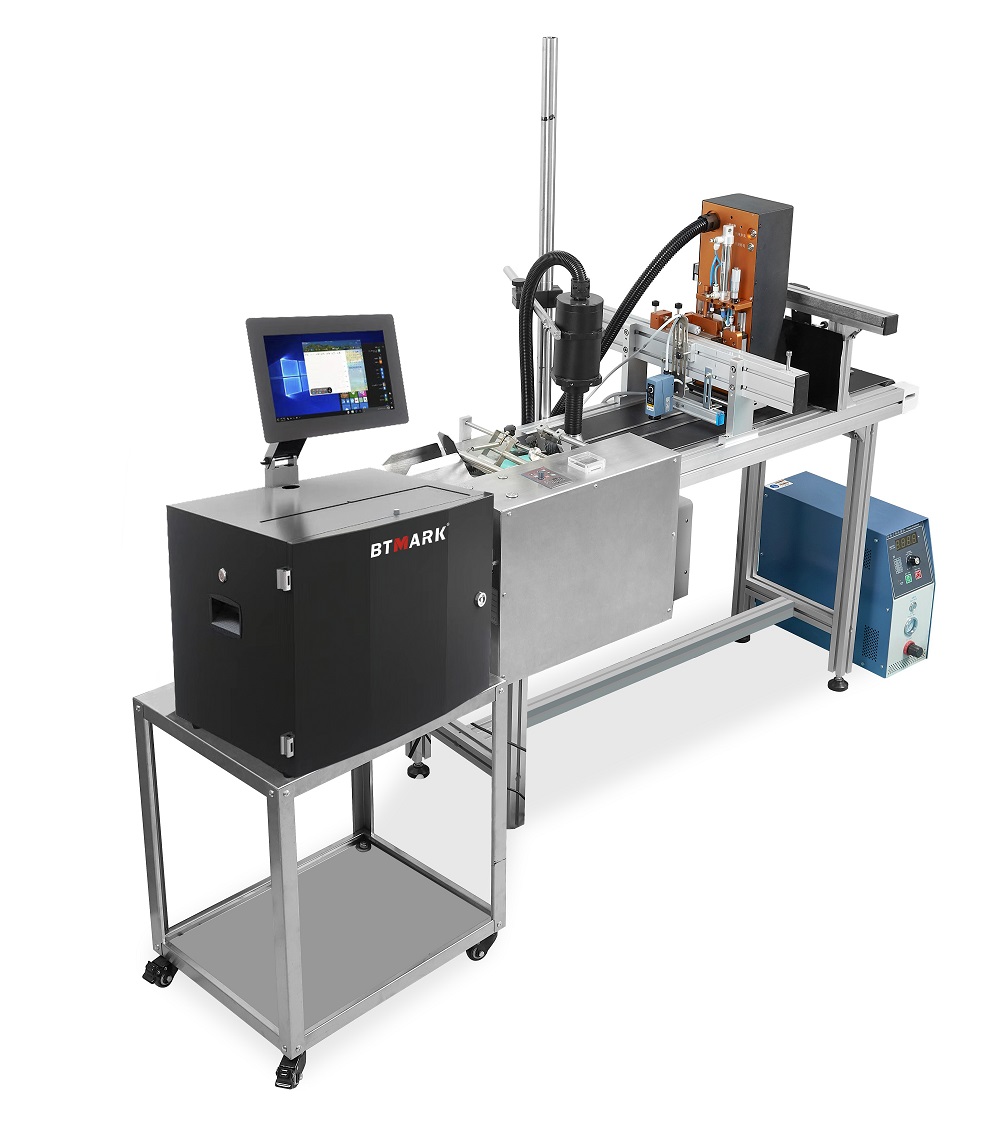
Industrial printing projects vary significantly.
A machine suitable for a narrow label may not be the ideal configuration for a wide carton or building material.
Before selecting a PIJ printing system, manufacturers should evaluate several factors.
1. Determine the Required Print Width
Start by determining how much surface area must be printed.
Consider whether the application requires:
Wide-format systems are especially useful where several elements must be printed together.
2. Define the Required Resolution
High-resolution applications may include:
Small text
Detailed graphics
QR codes
Barcodes
The PIJ platform supports adjustable transverse resolution from 200 dpi to 1200 dpi and, depending on the printhead configuration, longitudinal resolution up to 600 dpi.
3. Check Production Speed
Determine the real production-line speed before selecting the printer.
High-speed PIJ configurations can operate at up to 150 m/min.
The final achievable performance depends on the complete application.
4. Evaluate the Material
The catalog lists applications including:
Metal
Plastic
Paper
Film
Building material
Carton
Pipes
Labels
Always perform an actual print test before finalizing the system.
5. Determine the Printing Content
List all information required:
Text
Images
Barcodes
QR codes
Running numbers
Random codes
This helps define the appropriate software and printing configuration.
6. Consider Ink Color
Available UV ink colors include:
Black
White
Red
Yellow
Invisible ink
Choose an ink that provides suitable visibility and performance on the target substrate.
7. Consider Software Development
If the production project requires customized variable data or external system integration, confirm the software requirements before purchase.
The printing platform supports variable-data editing and provides an interface for secondary development.
8. Evaluate Maintenance
Consider features such as:
Negative-pressure ink control
Positive-pressure nozzle cleaning
Printhead protection
Dynamic system monitoring
These features affect long-term operation as much as printing speed does.
Conclusion
Choosing a Piezo UV Inkjet Printer requires matching the equipment to the actual production process.
The most important factors are print width, resolution, line speed, material, variable-data requirements, ink selection and software integration.
A real sample-printing test remains one of the best ways to confirm whether a proposed system is suitable.





