


Comprehensive Optimization of the Ink Path System of BTMARK S7L Inkjet Printer for the Stability Problem of Pigment Ink
来源:
|
作者:佚名
|
Release time:2026-01-20
|
165 次浏览:
|
🔊 Click to read aloud
❚❚
▶
|
Share:
In the field of industrial inkjet coding applications, BTMARK has long been dedicated to CIJ continuous inkjet printing technology. Among them, the pigment-type CIJ inkjet printer is widely used in industries such as cables, building materials, pipes, and chemicals due to its high printing contrast and suitability for dark and complex materials.
However, in practical applications, pigment ink has extremely high requirements for the stability of the ink path system of the equipment. In response to common industry challenges such as easy sedimentation and clogging of pigment inks during long-term operation, BTMARK has comprehensively optimized and upgraded the ink path system of the S7L pigment inkjet printer, further enhancing the reliability and continuous operation capability of the equipment under complex industrial conditions.
However, in practical applications, pigment ink has extremely high requirements for the stability of the ink path system of the equipment. In response to common industry challenges such as easy sedimentation and clogging of pigment inks during long-term operation, BTMARK has comprehensively optimized and upgraded the ink path system of the S7L pigment inkjet printer, further enhancing the reliability and continuous operation capability of the equipment under complex industrial conditions.
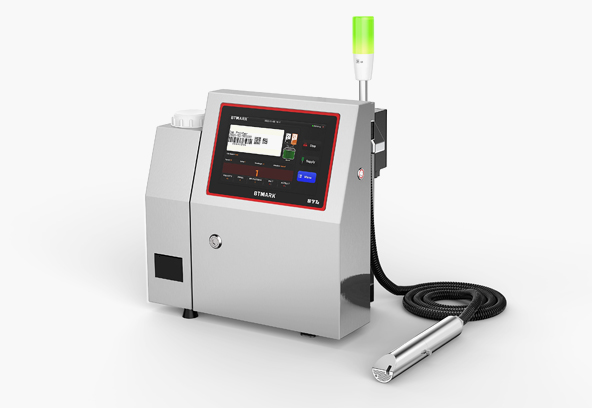
In the field of industrial inkjet coding applications, BTMARK has long been dedicated to CIJ continuous inkjet printing technology. Among them, the pigment-type CIJ inkjet printer is widely used in industries such as cables, building materials, pipes, and chemicals due to its high printing contrast and suitability for dark and complex materials.
However, in practical applications, pigment ink has extremely high requirements for the stability of the ink path system of the equipment. In response to common industry challenges such as easy sedimentation and clogging of pigment inks during long-term operation, BTMARK has comprehensively optimized and upgraded the ink path system of the S7L pigment inkjet printer, further enhancing the reliability and continuous operation capability of the equipment under complex industrial conditions.
Common challenges faced by pigment inkjet coding applications
In high-load industrial production environments, customers using pigment inkjet printers generally encounter the following problems:
Pigment ink is prone to sedimentation after long-term operation, which affects the stability of inkjet printing
The ink path structure is complex, the maintenance frequency is high, and the downtime cost increases
In environments with high dust, high temperature or vibration, it is difficult to maintain the consistency of inkjet coding for a long time
Continuous production places higher demands on the ink path circulation, pressure and control system
These issues not only affect the quality of inkjet coding, but also directly relate to the overall efficiency and operating costs of the production line.
The core optimization direction of the ink path system of the BTMARK S7L inkjet printer
Based on 23 years of inkjet coding application experience of BTMARK and a large number of on-site feedback from real customers, the BTMARK engineering team has carried out system-level optimization of the ink path system of the S7L pigment inkjet printer, with a focus on design improvements for the long-term stable operation of pigment ink.
Optimization of the ink path circulation structure
By optimizing the internal circulation path design of the ink circuit, the continuous fluidity of the pigment ink in the system is enhanced, effectively reducing the risk of pigment sedimentation and ensuring the stability and reliability of the inkjet printing process.
2. Targeted upgrades for key ink path components
Combining the characteristics of pigment ink, the key ink path components are optimized in design to make them more suitable for high-load and long-term continuous operation industrial inkjet coding applications.
3. Pressure and flow control are more precise
The ink path control logic has been further optimized. Under the conditions of equipment startup, operation and standby, stable printing conditions can be maintained, improving the consistency and repeatability of coding.
4. More suitable for the overall design of complex working conditions
The upgraded ink path system performs more stably in high-dust, high-temperature and continuous operation environments, effectively reducing unplanned downtime and improving the overall operational efficiency of the production line.
Optimized for pigment coding, it better meets the requirements of industrial-grade applications
Through the comprehensive optimization of the ink path system this time, the BTMARK S7L pigment inkjet printer has achieved multiple improvements in practical applications
The stability of inkjet printing has been significantly enhanced, making it suitable for continuous operation for 7×24 hours
The maintenance frequency of the ink path is reduced, minimizing downtime caused by blockages or abnormalities
It is more suitable for industries such as cables, building materials, and pipes that have high requirements for contrast in printing
Meet the long-term and stable demand for industrial inkjet coding solutions in medium and high-speed production lines
This also makes BTMARK S7L have stronger practical application competitiveness in the pigment-type CIJ inkjet printer market.
Conclusion: With 23 years of experience in inkjet coding applications, BTMARK contributes to stable and reliable inkjet coding solutions
The stability of the ink path system is a key factor in determining whether a pigment inkjet printer is truly suitable for industrial sites.
The comprehensive optimization of the ink path system of the BTMARK S7L inkjet printer this time is attributed to BTMARK's long-term accumulation of inkjet technology and its in-depth understanding of the real application scenarios of customers.
As a marking equipment manufacturing factory with 23 years of experience in industrial marking applications, BTMARK not only provides marking machine equipment but is also committed to creating industrial marking solutions that are truly suitable for production lines for customers.
We can customize suitable inkjet coding solutions for customers free of charge based on different industries, working conditions and inkjet printing requirements, helping to achieve stable, efficient and low maintenance cost inkjet coding applications.
Welcome to contact BTMARK for professional inkjet coding advice and testing support for your production line.

5th Floor, No.3 Building, Biguiyuan Intelligently Made Innovation Center, Xiegang Town, Dongguan, Guangdong

Quick Links
NameDescriptionContent


